



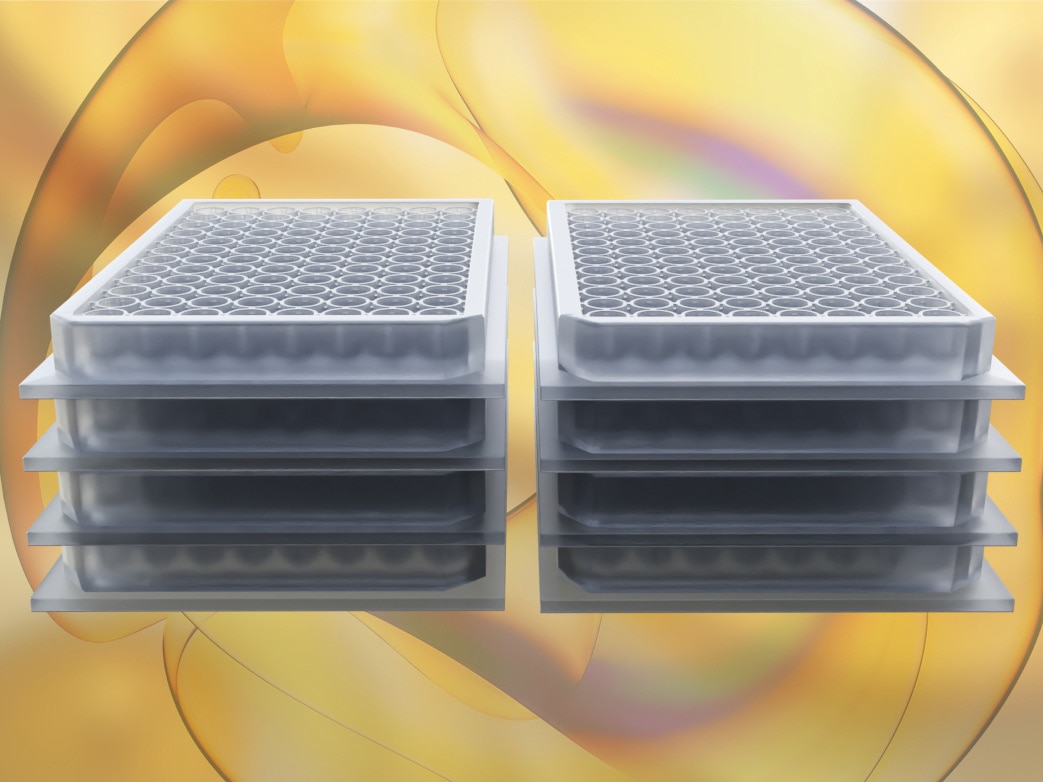



Mammalian Gene Overexpression cDNA/ORF Libraries
Whole genome, gene family, and custom cDNA and ORF libraries to accelerate your mammalian overexpression studies.
Exogenously overexpress mammalian genes from with our extensive cDNA and ORF collections. Pre-cloned, expression-ready reagents eliminate time spent cloning so you can focus on phenotypic results. Easy-to-transfer formats support unlimited experiments, making every clone a reusable resource. Human cDNA and ORF collections are sourced from trusted research groups, with fully sequenced options for added confidence.
See our gene overexpression applications page to learn more.

Mammalian cDNA and ORF libraries
cDNA and ORF gene-family libraries
-
Expression ready MGC cDNA libraries
Predefined human gene family clones in pCMV-SPORT6 expression vectors, ready to use. -
MGC cDNA libraries
Human MGC cDNAs arrayed into predefined gene family libraries for targeted expression studies. -
Precision LentiORF libraries
Expression-ready Precision LentiORFs that have been pre-arrayed into defined gene families. -
CCSB-Broad expression libraries
CCSB-Broad lentiviral clones arrayed into predefined gene family libraries for focused screens. -
CCSB Human ORFeome V8.1 libraries
Latest Human ORFeome from CCSB-DFCI (Dana-Farber), with NGS-verified clones and enhanced QC. -
CCSB Human ORFeome V5.1 libraries
These libraries consist of Gateway-adapted Human ORFeome clones that have been arrayed into pre-defined gene family collections.
Genome-scale cDNA and ORF libraries
-
MGC cDNA libraries
Genome-scale cDNA libraries for human, mouse, and rat from the Mammalian Gene Collection. -
Precision LentiORF libraries
Complete genome-scale library of almost 12,000 Precision LentiORFs, ideal for expressing thousands of ORFs. -
CCSB-Broad lentiviral expression library
Over 15,000 sequence-confirmed lentiviral ORF clones for genome-scale expression screening. -
CCSB Human ORFeome V8.1 libraries
The latest CCSB Human ORFeome genome scale library, fully sequenced, Gateway-adapted ORFs from Dana-Farber. -
CCSB Human ORFeome V5.1 libraries
Gateway-adapted human ORF clones enabling high-throughput transfer into multiple protein expression platforms. -
Original ORFeome collaboration (OC) libraries
Genome-scale human and mouse ORF libraries, fully sequenced and cloned into Gateway vectors.
Custom libraries and individual mammalian and non-mammalian clones
-
Cherry-pick library tool
Upload your gene list to design and order a custom cDNA or ORF library online. -
Mammalian cDNA & ORFs
Fully sequenced, pre-cloned mammalian cDNA and ORF clones for rapid and convenient gene overexpression studies in human, mouse, rat, and bovine systems. -
Non-mammalian research tools
cDNA and ORF reagents for non-mammalian models, plus strain collections: mutants, fusions, knockouts, and more.
Choose from three flexible library formats:
-
Whole genome
for comprehensive genome coverage for primary screens or as a convenient source of many clones
-
Gene family collections
with predesigned sets of genes against druggable targets, gene families, etc; across many cDNA and ORF products
-
Custom cherry-pick libraries
to upload your gene list to design and order a tailored cDNA or ORF library
-
Dharmacon™ cDNA and ORF Selection Guide
This quick selection guide will help to determine which gene expression tool will work for your experimental needs.
Benefits of using cDNA and ORF clones
-
Save time
Pre-cloned reagents eliminate time spent cloning. Expression ready and easy-to-transfer options allow you to focus on phenotypic results.
-
Have confidence
Human cDNA and ORF collections are sourced from trusted research groups with fully sequenced options.
-
Unlimited usage
Overexpression clones are a "reusable resource" supporting unlimited experiments.
-
Orthogonal reassurance
MGC, Precision LentiORF, and, ORFeome cDNA and ORF clones represent the collective efforts of genetic research for many years prior to modern RNAi and CRISPR technologies offering a historical and technically independent method to test results.
Learn about each cDNA or ORF collection
-
Mammalian Gene Collection (MGC)
The goal of the Mammalian Gene collection (MGC), a trans-NIH initiative, is to provide researchers with unrestricted access to sequence-validated, full-length protein-coding (FL-CDS) cDNA clones for human, mouse, and rat genes. In 2005, the project added the bovine cDNAs generated by Genome Canada.
MGC clones initially were obtained by random EST-screening of cDNA libraries. Starting in 2004, MGC used transcript-specific RT-PCR cloning to isolate cDNAs for genes not yet represented in MGC. Between 2006 and 2009, DNA synthesis methods were employed to provide FL-CDS clones for human and mouse genes still absent from the collection.
Inserts match the corresponding GenBank BC accession number*
Highlights
- Based on valued customer feedback, we initiated a re-sequencing effort with the goal of confirming the BC Accession identity of the clones in the Human MGC collection.
- The verified cDNA clones are now available with the catalog prefix MHS6278
- If your human MGC clone does not have a catalog number starting with MHS6278, it has not yet been included in the re-sequencing effort and can still be located under the MGC Fully Sequenced offering, contact Scientific Support.
*With the conclusion of the MGC project in March 2009, GenBank records of MGC sequences were frozen and are no longer updated. As the definition of full-length coding regions for some genes and transcripts may change over time, users planning to order MGC clones should monitor for these updates. Genome browsers and gene-specific databases — including the UCSC Genome Browser, NCBI's Map Viewer, and Entrez Gene — can be used to view relevant genomic regions and gene-related information.
-
Precision LentiORF Clone collection
Precision LentiORFs are fully-sequenced expression-ready human open reading frames (ORFs) that have been cloned into a lentiviral expression vector (pLOC), used for overexpressing human genes and proteins in mammalian cells.
Ideal for use in primary or difficult to transfect cells, Precision LentiORFs can be used to create stably expressing cell lines, investigate overexpression phenotypes, or perform RNAi rescue experiments.
Highlights
- Lentiviral ORF constructs require no subcloning for mammalian expression
- Fully sequenced coding sequences
- CMV promoter for robust protein expression
- GFP reporter is transported to the nucleus for easy tracking of protein expression
- Blasticidin resistance for selection of stable cell lines
- Secondary tags can be added to the MultiTag cloning site located downstream of the coding sequence
- Clones are available with or without native stop codons
-
CCSB-Broad Lentiviral Expression Library
The CCSB–Broad Lentiviral Expression Library is a genome-scale expression collection developed by researchers at Dana-Farber Cancer Institute and The Broad Institute to provide a sequence confirmed collection of over 15,000 human ORFs in an expression-ready lentiviral system. This library was derived from the hORFeome V8.1 and created to enable targeted experiments and large-scale screening in diverse cell types.
Highlights
- Genome-scale expression library of Human open reading frames
- CMV promoter drives ORF expression
- Blasticidin resistance allows for selection of transduced cells
- C-terminal V5 tag for additional utility
- Native stop codons have been removed
Note:
- CCSB-Broad Lentiviral Expression Clones (OHS6085) were fully sequenced, and match their accessions with no more than a single mutation within the open reading frame
- CCSB-Broad Lentiviral Expression Mutant Clones (OHS6269) were fully sequenced and have been found to contain more than 1 mutation within the open reading frames
- CCSB-Broad Lentiviral Expression Unsequenced Clones(OHS6270) have not been fully sequenced
- CCSB-Broad Lentiviral Expression Partially Sequenced Clones (OHS6271) have been partially sequenced, and the total number of mutations is unknown.
For all CCSB-Broad clones provided, designation as fully sequenced, mutant, unsequenced, and partially sequenced is based solely on the original 2011 published data; empirical sequencing results for individual clones and their updated information about can be viewed at the Broad Institute’s Public TRC Portal: https://portals.broadinstitute.org/gpp/public/clone/search.
-
CCSB human ORFeome v8.1 Collection
The human ORFeome v8.1 Collection represents the most recent version of the Human CCSB ORFeome. hORFeome v8.1 Collection has undergone more extensive QC than previous versions, having had clonal isolates verified by next-gen sequencing.
Derived from fully sequenced Mammalian Gene Collection (MGC) cDNAs and cloned into a Gateway-adapted entry vector, this human ORF collection is ideal for easily moving thousands of open reading frames into your choice of protein expression systems. For maximum flexibility, the ORF stop codon has been removed.
This collection was developed by the Center for Cancer Systems Biology (CCSB) of the Dana-Farber Institute.
Highlights
- This collection represents almost 12,000 unique genes.
- Gateway entry vectors facilitate convenient transfer of ORFs into compatible prokaryotic, mammalian, viral, or insect expression systems
- Native stop codons have been removed to allow for expression of tagged fusion proteins
More information on the creation of this library can be found in the following publication: X. Yang, et al., A public genome-scale lentiviral expression library of human ORFs. Nat Methods 8(8), 659-661 (2011).
-
CCSB human ORFeome v5.1 Collection
Derived from fully sequenced Mammalian Gene collection (MGC) cDNAs and cloned into a Gateway-entry vector, the human ORF collection can help you easily moving thousands of open reading frames into your choice of protein expression systems. For maximum flexibility, the ORF stop codon has been removed.
This collection contains over 15,000 individual clones representing more than 12,000 unique genes. These clones are derived from fully sequenced Mammalian Gene collection (MGC) full-length cDNAs. Each coding sequence (CDS) was amplified for only 25 cycles with gene-specific primers and high-fidelity polymerase, minimizing the risk of PCR-induced mutations.
This collection was developed by the Center for Cancer Systems Biology (CCSB) of the Dana-Farber Institute.
Highlights
- Genome-scale coverage - over 12,000 human genes available as ORF clones
- Gateway entry vectors facilitate convenient transfer of ORFs into compatible prokaryotic, mammalian, viral, or insect expression systems
- Native stop codons have been removed to allow for expression of tagged fusion proteins
-
Original human ORFeome Collaboration (OC) Collection
The ORFeome Collaboration (OC) is a group of academic and commercial laboratories that was formed to develop an unrestricted source of sequence-validated human open reading frame (ORF) clones. This collaboration of commercial and academic researchers has created a collection of fully-sequenced ORFs that will represent all curated genes in the human genome. These clones are verified to have a full-length ORF and are easily transferable into any Gateway-adapted expression vector. Additional clones for this expanding collection are offered as they become available.
Using the Mammalian Gene Collection (MGC) cDNA clones as starting material, the OC has been able to create over 10,000 full-length human ORF clones, making significant progress toward the goal of providing at least one ORF for each of the ~18,500 defined human genes.
Highlights
- Fully-sequenced human open reading frames
- Gateway-adapted ORFs allow for efficient transfer into a variety of compatible expression vectors
- Inclusion of native stop codons allows for expression of native proteins
- Removal of stop codons allows for expression of C-terminal fusion proteins
The Dharmacon Reagents portfolio is a licensed distributor of multiple gene expression clone collections (cDNAs and ORFs). These clone collections were generated by third party groups and the quality of the collections is largely dependent upon what was received from these groups. Specific clone information and plate coordinates were provided by the suppliers of these clone collections. These products have not been independently sequence verified and undergo limited third party testing.
The Dharmacon Reagents team has established quality procedures to ensure that individual clones are picked from the identified well in a plate, grown on the correct antibiotic, and are free of phage contamination. We are unable to provide additional information beyond what is listed on each of the collection pages. The original source projects (e.g., MGC, ORFeome, IMAGE Consortium, DKFZ, Kazusa) no longer maintain active databases.
These collections and individual clones are distributed "as-is" with no additional product validation or guarantees. Due to the limited information available from the original developers the clone you receive might not match the expected clone. If this occurs, please contact Scientific Support.
All clones and plates are provided as glycerol stocks. Individual strains are shipped at room temperature. Plates are shipped on dry ice. Both should be stored at -80ºC.