
Transfection and Transduction Reagents
Versatile tools for effective transfection and transduction with minimal cellular toxicity
The success of any gene modulation experiment, whether RNAi knockdown, CRISPR editing, or lentiviral cell engineering, depends on one critical step: efficient, low-toxicity delivery of your RNA or DNA cargo into target cells.
Our DharmaFECT™ family of lipid-based transfection reagents is purpose-built for:
- High-efficiency delivery across diverse cell types
- Low cellular toxicity to preserve experimental integrity
- Broad dynamic range for flexible experimental design
For lentiviral applications, LentiBOOST™ transduction enhancer elevates delivery success in hard-to-transduce cells and complex cell engineering workflows, while minimizing viral particle requirements and maintaining cell viability. LentiBOOST technology is actively used in the production of clinical-stage lentiviral-delivered therapies, offering a direct path from research to therapeutic applicability.
The Trans-lentiviral packaging systems are available for efficient generation of replication-incompetent lentiviral particles to deliver shRNA or ORF constructs in dividing and non-dividing mammalian cells.

DharmaFECT transfection reagents
-
DharmaFECT 1
Broadly applicable small RNA transfection reagent - delivers siRNA & miRNA efficiently across 35+ validated cell types.
-
DharmaFECT 2
Chemically distinct small RNA alternative - optimized siRNA & miRNA delivery when DharmaFECT 1 doesn't fit your cell type. -
DharmaFECT 3
Chemically distinct small RNA alternative - specialized siRNA & miRNA formulation for cell types beyond standard optimization. -
DharmaFECT 4
Chemically distinct small RNA alternative - low-concentration siRNA & miRNA delivery for screening and optimization experiments. -
DharmaFECT Set of 4
An aliquot of each of the four DharmaFECT formulations for determining the optimal reagent for your cells and experimental conditions.
-
DharmaFECT Duo
For high-confidence co-transfection of small RNA and plasmid. -
DharmaFECT kb
For efficient transfection of plasmid DNA with minimal cytotoxicity.
Lentiviral packaging and transduction enhancer
-
LentiBOOST lentivirus transduction enhancer
A highly effective, non-cytotoxic transduction enhancer for improved transduction of lentivirus in difficult cell types.
-
Lentiviral packaging solutions
Trans-lentiviral packaging system generates replication-incompetent particles to deliver and express shRNA, ORF, or CRISPR products.
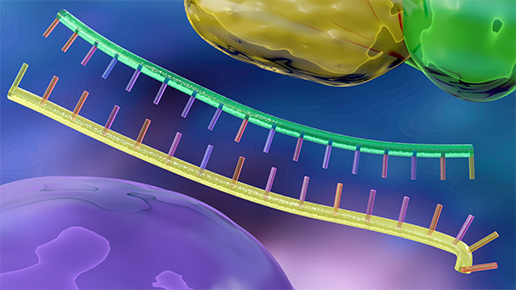
Select the appropriate DharmaFECT formulation for the delivery of small RNAs
-
The table below lists transfection recommendations to help you select the appropriate DharmaFECT formulation for your research.
You can also download a PDF version of the DharmaFECT Cell Type Guide.
Human Cell line Cell type Recommended DharmaFECT formulation DharmaFECT volume/well (μl) in 96 well plate Plating density in 96 well plate (cells per well) Other successful formulations 786-0 Kidney adenocarcinoma 1 0.4 5 × 10³ 2 A549 Lung carcinoma 1
0.2
1 × 10⁴
2, 3, 4
BxPC3
Pancreas adenocarcinoma
2
0.2
5 × 10³
1, 3, 4
DLD-1
Colorectal adenocarcinoma
2
0.4
5 × 10³
1,3
DU 145
Prostate carcinoma
1
0.2
1 × 10⁴
2, 3, 4
NCI-h2299
Lung carcinoma
2
0.2
1 × 10⁴
4
HCT-116
Colorectal carcinoma
2
0.1
5 × 10³
4
HEK293
Kidney transformed embryonic cells
1
0.2
1 × 10⁴
2, 4
HeLa
Cervical epithelial adenocarcinoma
1
0.2
5 × 10³
2, 3, 4
HeLa S3
Cervical epithelial adenocarcinoma
4
0.4
5 × 10³
1, 2, 3
Hep G2
Hepatocellular carcinoma
4
0.4
1 × 10⁴
1, 2
hMSC
Mesenchymal stem cells
1
0.4
5 × 10³
2, 3, 4
HT-29
Colorectal carcinoma
1
0.2
5 × 10³
2, 3, 4
HT1080
Fibrosarcoma
4
0.2
5 × 10³
1, 2, 3
Huh-7
Hepatocarcinoma
4
0.05
5 × 10³
1, 2
HUVEC
Umbilical vein endothelial cells
4
0.2
2 × 10⁴
1, 2
LNCaP
Prostate carcinoma
3
0.2
1 × 10⁴
1
MCF-10a
Breast adenocarcinoma
1
0.2
1 × 10⁴
2
MCF-7
Breast adenocarcinoma
1
0.2
1 × 10⁴
2, 4
MDA-MB-453
Breast adenocarcinoma
2
0.2
1 × 10⁴
1, 3, 4
MDA-MB-231
Breast adenocarcinoma
4
0.1
5 × 10³
1
OVCAR-3
Ovarian adenocarcinoma
1
0.1
5 × 10³
2, 3, 4
PC-3
Prostate carcinoma
2
0.2
1 × 10⁴
3
SK-BR3
Breast adenocarcinoma
2
0.2
1 × 10⁴
1, 3, 4
SK-OV-3
Ovarian adenocarcinoma
3
0.4
1 × 10⁴
1, 2, 4
u87MG
Brain glioblastoma
1
0.1
5 × 10³
2, 3, 4
Rodent Cell line Cell type Recommended DharmaFECT formulation DharmaFECT volume/well (μl) in 96 well plate Plating density in 96 well plate (cells per well) Other successful formulations A7r5
Rat aortic smooth muscle
2
0.1
5 × 10³
1
C2C12
Mouse myoblasts
1
0.2
5 × 10³
2, 3, 4
CHO K1
Chinese hamster ovary cells
4
0.8
1 × 10⁴
1, 2
ES-D3
Mouse embryonic stem cells
1
0.2
2 × 10³
2
ES-E14TG2a
Mouse embryonic stem cells
1
0.2
2 × 10³
2
H9c2
Rat myoblasts
1
0.2
1 × 10⁴
2, 3, 4
J774A.1
Mouse macrophages
4
0.2
1 × 10⁴
-
NIH/3T3
Mouse embryonic fibroblasts
1
0.2
1 × 10⁴
3
NRK-49F
Rat kidney fibroblasts
2
0.2
1 × 10⁴
1, 4
Rat2
Rat fibroblasts
1
0.2
2 × 10⁴
2
3T3-L1
Mouse embryonic fibroblasts
1
0.2
5 × 10³
3
Other Cell line Cell type Recommended DharmaFECT DharmaFECT μl/well Plating density (cells/well) Other successful formulations COS-7
African green monkey kidney
2
0.4
5 × 10³
1, 3, 4
All experimental conditions resulted in cell viability and positive control gene silencing of 80% or better. All experiments were done in 96-well plates with non-targeting control siRNA and PPIB (Cyclophilin B) or GAPD Control pools at 25 nM; Alamar Blue (viability) and knockdown measured at 24 hours. Data normalized to untransfected for viability and both untransfected and non-targeting control for knockdown. Transfection conditions should always be re-evaluated in the context of a new plate format or assay-specific requirements for cell density.
Featured resources
Carousel items
-
Transfecting guide RNA into stable Cas9-expressing cells
Optimize reverse transfection of synthetic guide RNA into Cas9-expressing cells using DharmaFECT transfection reagents -

DharmaFECT customer recommend product bulletin
Customer recommended DharmaFECT™ transfection reagent formulation for various cell lines -

Pro tips for successful transfection
Top suggestions for transfection success. See how to select the right reagents for your needs and optimize conditions to achieve the best possible results -

Watch the DharmaFECT Duo Video
Learn about the different reagents that can be co-transfected with ease using DharmaFECT Duo.