



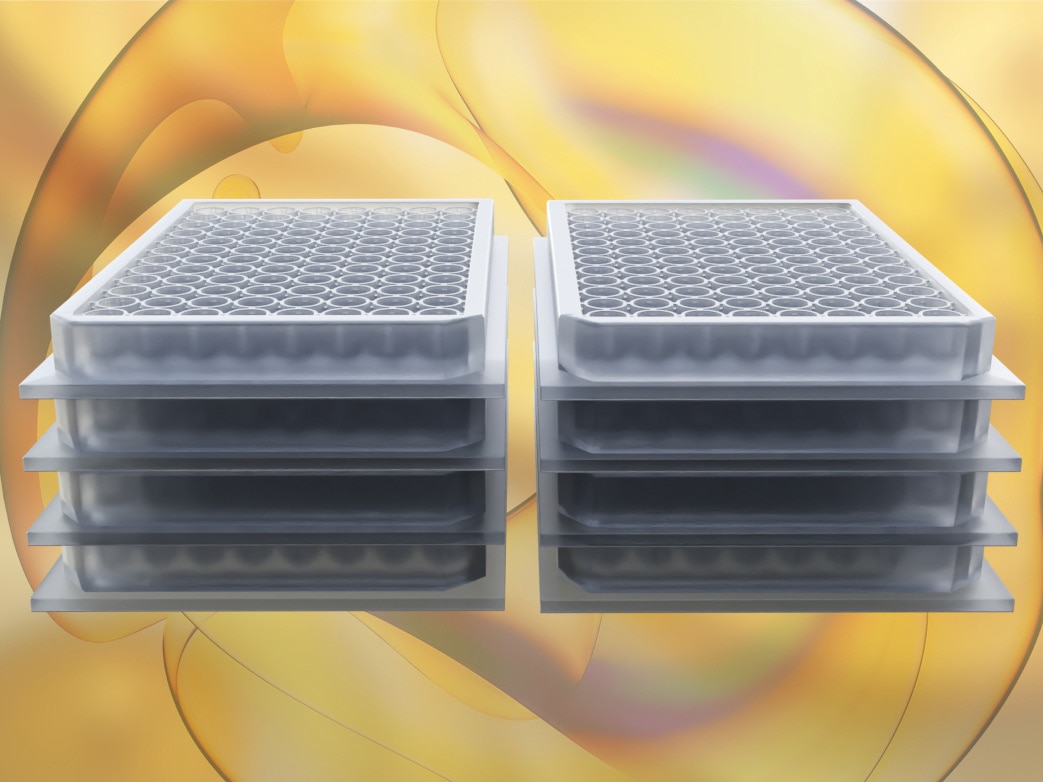



Mimix™ Geni™ Onco Mix 1 DNA/RNA FFPE Reference Standard
The Mimix™ Geni™ Onco Mix 1 DNA/RNA FFPE Reference Standard is an industry first pan-cancer dual DNA/RNA reference material developed in collaboration with the Medical Device Innovation Consortium (MDIC). Mutations with clinical relevance in oncology testing, as selected by a committee of industry experts, have been engineered into the GM24385 Genome-in-a-Bottle Consortium cell line, providing a highly characterized somatic cancer reference standard (SRS) you can trust to verify and monitor your oncology detection assays and workflow.
For the convenience of our US-based customers, this product is now shipped from our Lafayette, Colorado site in the USA.
.jpg "Brand Image")
The Mimix Geni Onco Mix 1 DNA/RNA FFPE Reference Standard is a highly characterized somatic cancer reference standard developed in collaboration with the Medical Device Innovation Consortium (MDIC) as part of the Somatic Reference Samples (SRS) Initiative led by MDIC to help clinical diagnostic labs improve the accuracy of their cancer diagnostic assays.
These new somatic cancer reference standards have been developed from the Genome-in-a-Bottle Consortium (GIAB) cell line, recognized by the industry as one of the most tested and trusted cell lines available. Revvity has engineered the GM24385 GIAB cell line to contain 7 cancer-relevant mutations selected by the SRS steering committee of industry experts. The mutations include 2 single nucleotide variants, 1 multi-nucleotide variant, 2 indels, and 2 gene fusions. MDIC has tested and verified this material. The reference standards will be sent to multiple labs for interlab validation and the report will be made available once complete in 2026.
Key Features
- Developed from an engineered Genome-in-a-Bottle Consortium cell line (GM24385)
- Engineered with 7 cancer-relevant mutations
- Contains DNA and RNA fusions
- Cell line-derived for patient-like performance
- Tested and verified by MDIC
- Multi-lab testing WGS underway
- Negative control also available (HD876)
The Mimix Geni Onco Mix 1 DNA/RNA FFPE Reference Standard comes with NGS data. You can access the VCF file here. Each batch was sequenced using Agilent's CREV4 (Clinical Research Exome) kit at a depth of 500x on Aviti platform and run through the Illumina DRAGEN Somatic Pipeline for mapping, sorting, and variant calling.
Technical Product Information
Only DNA or RNA should be extracted at any one time. Using dual extraction kits is not recommended for this product.
Format: FFPE
Fixation method: 4% PFA (w/v)
Section size: 15µm
Cell density: 150 x 106 cells per block. Approx. 4.5 x 10⁵ cells per section
Expected DNA yield: ≥400ng using Promega Maxwell RSC FFPE Plus DNA Extraction kit
Expected RNA yield: 100ng using Chemagic ™ CMG-1212
Genes covered: ERBB2, BRAF, EGFR, PDGFRA, FGFR3, TPM3-NTRK1 fusion, CCDC6-RET fusion. Please refer the VCF file for mutations covered by NGS.
Allelic frequencies: 9.42% - 13.48%
Verified mutations:
| Chromosome | Gene | Variant | Variant Type | Expected Allelic Frequency (%) |
|---|---|---|---|---|
| Chr17 | ERBB2 | V659E | MNV | 10.82% |
| Chr7 | BRAF | V600E | SNV | 9.75% |
| Chr7 | EGFR | A763_Y764insFQEA | INDEL | 9.42% |
| Chr4 | PDGFRA | I843del/ I843_D846del | INDEL | 11.51% |
| Chr4 | FGFR3 | S249C | SNV | 10.15% |
| Chr1 | TPM3-NTRK1 | Fusion | Fusion | 13.48% |
| Chr10 | CCDC6-RET | Fusion | Fusion | 11.22% |
General information
Storage: 4°C
Shipping: Ambient
Expiration: See all product shelf life information
Quality control
Allelic frequency: Droplet Digital™ PCR, Reverse Transcription Droplet Digital™ PCR and Whole Exome Sequencing
DNA Quantification: Quantifluor®
DNA Integrity: Agarose Gel electrophoresis
RNA Quantification: Qubit® RNA HS Assay (Thermo Fisher Scientific)
RNA Integrity: DV200 ≥65% using TapeStation High Sensitivity RNA ScreenTape Assay (Agilent)
RNA Expression: TPM3-NTRK1 ≥40 copies/ng and CCDC6-RET ≥4 copies/ng confirmed by fusion-specific RT-ddPCR using the QX200 ddPCR System (BioRad)
Manufacturing Quality: ISO 13485
Intended Use: For research use only. Not for use in diagnostic procedures.
We accept orders using the following methods.
Online
Our online catalog and ordering system can be used to search our full menu of available Reference Standards. Select your desired reference standards and add them to the shopping basket. Your order can be submitted instantly using credit card, telephone ordering or a purchase order number as the preferred payment method.
Offline
If you prefer to send us orders outside our online ordering system, please see the Contact Us page for telephone, fax, and email details in order to place an order. We recommend that you use our online system to identify the products you require and their respective “HD” product codes.
To order offline we will require the following information:
- Product code(s) of the item(s) you wish to order (e.g. "HD123")
- Your name, email address, title and organization
- Shipping address and billing address with contact names
- Purchase Order number if you have one
- Telephone number
- VAT Number (European Countries only)
If you’re having trouble ordering or finding what you’re looking for, or if you require something we don’t yet offer, please contact us.
Application notes
Safety data sheets
Selection guides
Reference Standards
-
At what temperature do you ship reference standards?
-
Can both DNA and RNA be extracted from the same FFPE curl?
-
How can I open the NGS data .gz files?
-
How do you manufacture your Horizon Reference Standards?
-
How do you recommend extracting DNA from an FFPE reference standard?
-
How was the batch-specific supplementary NGS data produced and analysed?
-
Is it possible to order custom versions of Mimix Reference Standards?
-
The FFPE yield is lower than expected, how can I improve the yield?
-
What batch-specific supplementary NGS data is provided?
-
Where can I access batch-specific supplementary NGS data?
-
Which extraction kits have been tested with FFPE RNA reference standards?
-
Why do I see different allele frequencies or different variants in my NGS data when comparing to the data provided with the reference standard?